
An annotated bibliography is a list of sources, formatted in APA, MLA, or another citation style, where every entry is followed by a short paragraph called an annotation. That paragraph usually summarizes what the source says, evaluates how reliable or useful it is, and reflects on how it fits into your own research. It’s different from a plain bibliography or works cited page, which only lists sources without any commentary. Instructors assign annotated bibliographies to make sure you’ve actually read and understood your sources before you start writing, not just collected a pile of links and citations.
What Is an Annotated Bibliography?
At its simplest, an annotated bibliography is a reference list with homework attached to each entry. You still format every source correctly, the same way you would for the references or works cited page of a full paper, but underneath each citation you add a paragraph that shows you’ve engaged with the source rather than just found it. That combination, accurate citation plus a substantive annotation, is what separates this assignment from a simple source list.
This assignment usually shows up early in a research project, often before you’ve written a word of the paper itself. If you’re working toward a longer piece, it pairs naturally with a full research paper writing guide, which walks through everything that comes after your sources are gathered and evaluated, from thesis statement to final draft.
It’s also common as a required step before a research proposal. If your program expects you to justify a study before you’re allowed to run it, you’ll likely need a solid set of source annotations first, then move on to how to write a research proposal and sketch out a research proposal outline once you know which sources actually support the study you want to run.
This isn’t just a classroom exercise, either. Researchers building a grant application, graduate students scoping out a thesis topic, and professionals doing a literature scan before a project all use some version of this same format, because it’s genuinely one of the fastest ways to organize a pile of reading into something usable. Learning to do it well now pays off well past whatever specific assignment sent you looking for this guide.
A quick note on terminology, since two closely related phrases cause a lot of confusion in search results and in assignment sheets. “Annotated works cited” means the exact same thing as “annotated bibliography,” just using MLA’s preferred term for a source list, works cited, instead of the more general word bibliography. If your instructor uses one phrase and a classmate uses the other, you’re both being asked for the same document. You may also come across the term “webliography,” which just refers to a bibliography made up entirely of website sources rather than books or journal articles, still built the same way, citation followed by annotation.
Descriptive, Evaluative, and Combination Annotations
Not every annotated bibliography wants the same depth of commentary, and knowing which type your assignment expects changes how you should spend your time on each entry.
Descriptive annotations summarize a source’s content and scope without judging its quality. These are the fastest to write and are common in early-stage research when you’re still mapping out what exists on a topic rather than deciding what’s strongest.
Evaluative annotations add a judgment of the source’s reliability, methodology, or bias on top of the summary. These take longer, since you need enough background in the topic to say something specific about whether a source holds up, rather than a generic line like “this source is credible.”
Combination annotations do both of the above and add a third layer, how the source connects to your own project specifically. This is the most common type assigned at the college level, and it’s usually what your instructor means even when the assignment sheet just says “annotated bibliography” without specifying a type.
If your assignment sheet doesn’t say which type it wants, combination annotations are the safest default. They take the most effort, but they also demonstrate the most, and it’s much easier to trim a combination annotation down to a descriptive one than to pad a thin summary into something evaluative after the fact.
Sources for an annotated bibliography can include journal articles, books, credible websites, government reports, or documentaries, essentially anything you’d normally cite in a paper. The mix you’re expected to use usually depends on your field: a literature-heavy course might expect mostly peer-reviewed journal articles, while a policy or current-events project might reasonably include government or news sources alongside academic ones. Check your assignment sheet for any specific requirements on source type before you start gathering, since some instructors explicitly exclude general websites or require a minimum number of peer-reviewed sources.
Why Do Instructors Assign Annotated Bibliographies?
The honest answer is accountability. It’s easy to skim ten abstracts, drop the citations into a reference manager, and call it research. An annotated bibliography makes that shortcut much harder, because you can’t write a real evaluation of a source you haven’t actually read. Instructors use this assignment to catch that gap early, while there’s still time to swap out a weak source for a stronger one.
There’s a practical payoff for you too. Building a good annotated bibliography before you draft anything means you walk into your outline already knowing which sources support which argument, which ones disagree with each other, and which ones you can safely cut. A quick look at a research paper outline makes this connection clear: the sources you’ve already evaluated map directly onto the sections you’ll eventually need to fill.
Annotated bibliographies also train a skill you’ll reuse constantly: reading critically instead of passively. Once you’ve written a dozen of these, skimming a new source and immediately spotting its argument, method, and weak points becomes almost automatic, which saves enormous time on every research project after this one.
There’s a grading angle worth understanding too. Because each entry is self-contained, instructors can grade an annotated bibliography quickly and consistently, checking citation accuracy against one rubric line and annotation quality against another. That consistency cuts both ways: it means a correctly formatted citation with a thin, generic annotation will still lose points, even if the source itself was a strong pick. The annotation is doing real work in the grade, not just filling space under the citation.
The Parts of a Single Annotation
According to the widely used Purdue OWL framework, a strong annotation does up to three things: summarize, assess, and reflect. Not every assignment requires all three, so check your instructor’s specific instructions, but understanding all three helps you know what’s actually missing if your annotation feels thin.
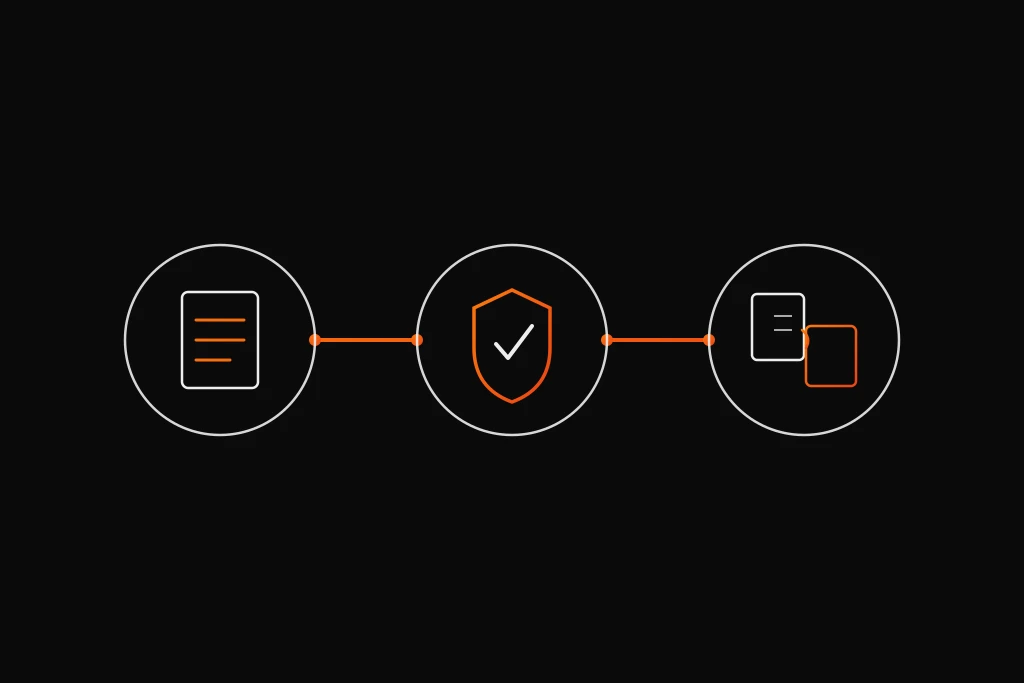
- Summarize: state the source’s main argument, purpose, and scope in your own words. This is the exact same skill covered in our guide to writing a research paper summary, just compressed into a sentence or two instead of a full paragraph.
- Assess: evaluate the source’s credibility, methodology, and usefulness. Is the author qualified? Is the evidence strong? Is this source biased, outdated, or narrow in scope compared to others you’re using?
- Reflect: explain how this specific source fits into your own project. Does it support your argument, complicate it, or represent an opposing view you need to address?
Descriptive annotations only summarize. Evaluative annotations summarize and assess. Combination annotations do all three, summarize, assess, and reflect, and they’re what most college-level assignments actually expect, even when the instructions just say “annotated bibliography” without spelling out which type they mean.
Annotated Bibliography vs. Bibliography, Literature Review, and Abstract
These four terms get confused constantly, and mixing them up is one of the fastest ways to turn in the wrong kind of document. They’re related, but each one does a different job.
| Type | What It Contains | Typical Length Per Source |
| Bibliography / Works Cited | Citation only, no commentary | One line per source |
| Annotated Bibliography | Citation plus a summary/evaluation paragraph | 3 to 8 sentences per source |
| Abstract | A summary of your own paper, not a source list | 150 to 250 words total |
| Literature Review | Sources synthesized together into a connected argument | Varies, often several paragraphs per theme |
The comparison that trips students up most is annotated bibliography versus literature review. An annotated bibliography treats each source as its own separate entry, one citation, one paragraph, moving on to the next. A literature review does the opposite: it pulls multiple sources together into a single, connected discussion organized by theme or argument rather than by source. If you’re building toward that stage, how to write a literature review and a literature review outline both show how your individual annotations eventually get woven together instead of staying separate.
There’s also a natural order to these assignments worth knowing. An annotated bibliography almost always comes first, while you’re still deciding which sources earn a place in your project. A literature review comes after, once you already know your full source list and are ready to organize them into a connected argument. If you’re assigned both across a semester, the annotations you write now are effectively a rough draft of the analysis your literature review will need later, so it’s worth writing them with that second use in mind rather than treating them as disposable.
The other common mix-up is annotated bibliography versus abstract. An abstract summarizes your own paper for someone deciding whether to read it. An annotated bibliography summarizes and evaluates someone else’s sources for your own use. If your assignment is actually asking for the former, our guide on writing an abstract covers that format and length expectations in detail.
How to Write an Annotated Bibliography, Step by Step
Step 1: Find and Evaluate Your Sources First
Before you write a single annotation, gather more sources than you’ll actually need and skim each one to confirm it’s relevant and credible. Look at the publication date, the author’s credentials, and where it was published, a peer-reviewed journal carries more weight than a general-interest website for most academic assignments. It’s much easier to drop a weak source now than to write a full annotation for it and only realize later it doesn’t hold up.
A rough target is to gather about twice as many sources as your assignment requires, then cut the weakest half after your first skim. This gives you room to be selective instead of settling for the first handful of results your library database returns.
Step 2: Format the Citation Correctly
Write out the full citation in whichever style your assignment requires, APA, MLA, Chicago, or another. Get this right before you write the annotation underneath it, since a correct citation format is graded separately from the quality of your annotation and it’s an easy place to lose points for a careless mistake.
Double-check details that are easy to get wrong on the first pass: issue and volume numbers for journal articles, publisher location requirements for older style editions, and whether your specific style edition wants a DOI or URL included. These small details are exactly what most citation-checking tools catch quickly if you run your list through one before finalizing it.
Step 3: Read the Source With Your Research Question in Mind
Read closely enough to answer three questions: what is this source arguing, how does it support that argument, and how does it relate to what you’re researching. If the source is a full paper, its introduction for a research paper is usually the fastest place to confirm its purpose and scope before you commit to reading the whole thing.
Take notes as you read rather than trying to reconstruct the argument from memory afterward. A few bullet points on the source’s main claim, its evidence, and one specific detail you might cite later will save you a second full read when you sit down to draft the annotation.
Step 4: Draft the Summary Portion
Write one to three sentences stating the source’s main argument and scope, entirely in your own words. Resist the urge to quote the abstract directly. Paraphrasing here, rather than lightly rewording, is what shows your instructor you actually understood the source.
Step 5: Add Your Evaluation and Reflection
Add a sentence or two assessing the source’s reliability and a sentence connecting it to your own project. This is the part students most often skip under time pressure, and it’s usually worth the most credit, since it’s the part that can’t be faked by skimming an abstract.
A useful test for the reflection sentence: if you could delete it and paste it under a different source in your bibliography without changing a word, it’s too generic. A strong reflection names the specific claim, chapter, or theme the source supports.
Step 6: Check Formatting, Indentation, and Order
Confirm your citations are alphabetized correctly, your indentation matches your required style, and your annotation paragraph is the right length for your assignment. A well-researched annotation formatted incorrectly still loses points, so don’t skip this pass.
A Simple Annotated Bibliography Template You Can Copy
If you’d rather start from a blank structure than build one from scratch, this generic template works across most citation styles. Just swap in your required formatting for the citation line and adjust the indent to match your style guide.
[Citation in your required style, alphabetized by author’s last name]
[Summary: one to three sentences stating the source’s main argument, scope, and purpose.] [Assessment: one to two sentences on the source’s credibility, methodology, or limitations.] [Reflection: one sentence on how this source supports or complicates your own research question.]
Repeat this pattern for each source, keeping annotation length consistent across your whole list unless a particular source genuinely warrants more discussion than the others. Consistency in length and structure is one of the easiest ways to make an annotated bibliography look polished with minimal extra effort.
Annotated Bibliography Example
Here’s a complete, generic entry showing what a finished annotation looks like once every part is in place. It’s built around a fictional study so you can see the format clearly without getting distracted by real subject matter.
Chen, L., & Martinez, R. (2022). Social media use and adolescent sleep quality: A longitudinal study. Journal of Adolescent Health Research, 15(3), 245-261.
Chen and Martinez track sleep patterns and self-reported social media use among 320 adolescents over eighteen months, finding that late-night use is more strongly associated with poor sleep quality than total daily screen time. The study’s longitudinal design is a strength, since it captures change over time rather than a single snapshot, though the reliance on self-reported use rather than device tracking data is a limitation worth noting. This source is useful for a project focused on adolescent sleep habits specifically, since it isolates timing of use as a distinct variable rather than treating all screen time the same way.
Notice the structure: the first sentence summarizes the finding, the second sentence assesses the study’s strengths and a limitation, and the third sentence reflects on how the source fits a specific research project. That three-part shape, summarize, assess, reflect, is the pattern to repeat across every entry in your own bibliography, adjusting length based on your assignment’s requirements. If this source came from a paper with a clear research paper conclusion, that’s often the fastest place to confirm the authors’ own take on their findings before you write your assessment.
APA Annotated Bibliography Format
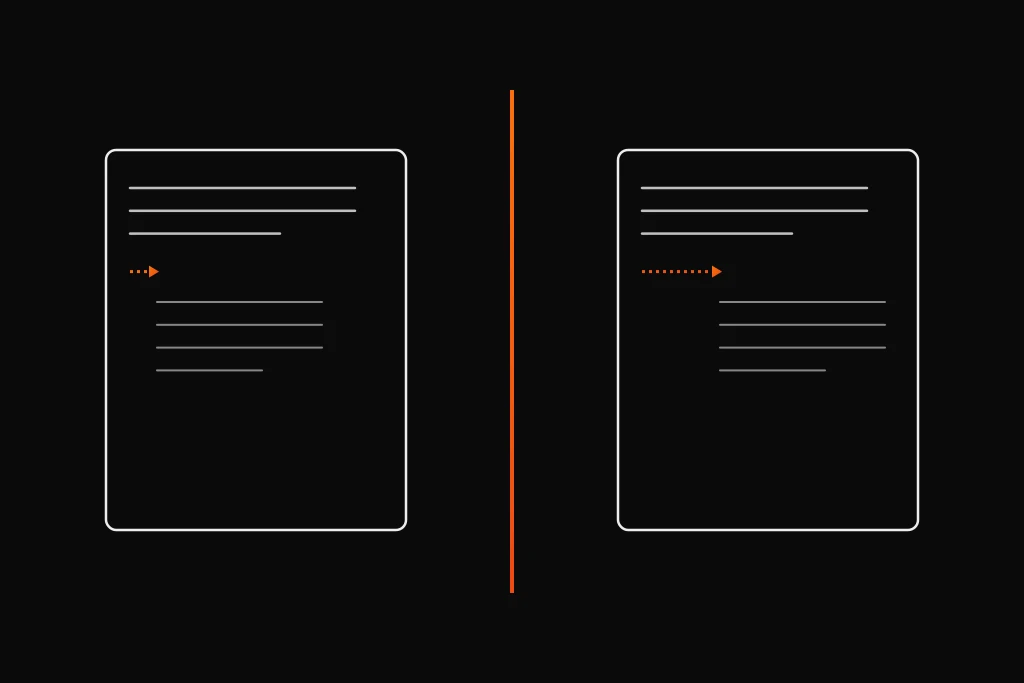
In APA style, your citation follows standard APA 7 reference formatting, and the annotation paragraph underneath is indented an additional half inch from the reference’s hanging indent, according to Purdue OWL’s formatting guidance. The page itself is titled “References,” the same as a standard APA reference list, not “Annotated Bibliography.”
Chen, L., & Martinez, R. (2022). Social media use and adolescent sleep quality: A longitudinal study. Journal of Adolescent Health Research, 15(3), 245-261. https://doi.org/10.1234/jahr.2022.0145
This longitudinal study examines the relationship between social media timing and sleep quality in 320 adolescents over eighteen months. The authors find that late-night use predicts poor sleep more strongly than overall daily screen time, offering a more precise variable than prior studies that treated all screen time equally. Useful for narrowing a research question focused specifically on timing rather than total exposure.
If your study’s methodology is the part you’re evaluating most closely, comparing it against the paper’s own research paper methodology section is the fastest way to write an accurate, specific assessment instead of a vague one.
MLA Annotated Bibliography Format
In MLA style, the same source above would appear in a Works Cited list using standard MLA 9 citation rules, and the annotation is indented a full inch beneath the citation, per Purdue OWL’s samples page, which is more indentation than APA or Chicago require. This is one of the most common formatting mistakes students make when switching between styles for different classes.
Chen, Li, and Rosa Martinez. “Social Media Use and Adolescent Sleep Quality: A Longitudinal Study.” Journal of Adolescent Health Research, vol. 15, no. 3, 2022, pp. 245-261.
This study follows 320 adolescents for eighteen months, tracking how the timing of social media use relates to sleep quality. Late-night use emerges as a stronger predictor of poor sleep than overall daily screen time, which sharpens the case for measuring timing specifically rather than lumping all screen use together. A strong source for any project comparing screen habits against health outcomes rather than academic performance alone.
Whether you’re working in APA or MLA, the underlying findings you’re describing usually come straight from the source’s results section, while the interpretation and real-world relevance usually comes from its discussion section. Knowing which section to pull from keeps your annotation accurate instead of guessed at.
Chicago, Turabian, ASA, and Harvard Annotated Bibliographies
These styles show up less often than APA and MLA in undergraduate classes, but they’re standard in history, sociology, and some business courses. The citation format changes by style, but the core annotation content, summarize, assess, reflect, stays the same across all of them.
| Style | Common In | Annotation Indent |
| Chicago (Notes-Bibliography) | History, humanities | 0.5 inch |
| Turabian | Student papers following Chicago conventions | 0.5 inch |
| ASA | Sociology | 0.5 inch, hanging indent on citation |
| Harvard | Business, some UK and Australian programs | 0.5 inch |
If your course uses one of these less common styles, always confirm the exact citation formatting with your department’s style guide or your instructor, since small conventions do vary by discipline even within the same broader style, especially for footnote versus parenthetical citation preferences.
Chicago style actually offers two separate citation systems, notes-bibliography and author-date, and which one your annotated bibliography should use depends on your field. History and humanities courses typically use notes-bibliography, where sources are cited with footnotes and gathered in a bibliography at the end. Social science courses using Chicago more often use the author-date system, which looks closer to APA’s parenthetical in-text citations paired with a references list. Turabian is essentially Chicago style adapted specifically for student papers, and it follows whichever of the two systems your instructor assigns.
How Long Should an Annotated Bibliography Be?
Length depends entirely on your assignment, but a few patterns hold across most courses. A single annotation usually runs three to eight sentences, roughly 100 to 200 words, unless your instructor specifically asks for a longer, more analytical entry. The full bibliography’s length just scales with how many sources you’re required to include, typically anywhere from five to twenty for a standard undergraduate assignment.
- Descriptive annotation (summary only): 2 to 4 sentences
- Evaluative annotation (summary plus assessment): 4 to 6 sentences
- Combination annotation (summary, assessment, and reflection): 6 to 8 sentences
When in doubt, shorter and more precise beats longer and padded. A tight four-sentence annotation that clearly summarizes, assesses, and reflects on a source will usually score better than an eight-sentence entry that repeats the same point three different ways.
Length expectations also shift with academic level. A high school or introductory college assignment often wants short, mostly descriptive annotations focused on demonstrating basic comprehension. A senior thesis or graduate-level annotated bibliography usually expects longer, more analytical entries that critically compare sources against each other, sometimes running a full paragraph or more per source. If your assignment doesn’t specify, matching the depth of your annotations to the complexity of your actual research question is a reasonable default.
Common Mistakes Students Make Writing Annotated Bibliographies
A handful of mistakes show up again and again in annotated bibliography assignments, and most of them cost points that have nothing to do with how good your sources actually are.
- Writing only a summary when the assignment asks for evaluation too. Check your instructions for words like “assess,” “evaluate,” or “reflect,” not just “summarize.”
- Quoting the source’s abstract instead of paraphrasing it. This is an easy, avoidable plagiarism risk, and it also signals you didn’t actually read past the abstract.
- Getting the citation format right but forgetting the annotation’s indentation rules, especially the difference between MLA’s full-inch indent and APA or Chicago’s half-inch indent.
- Treating every source with the same level of detail regardless of how central it is to the project, which wastes space on minor sources and shortchanges your most important ones.
- Forgetting to alphabetize entries by author’s last name, the same rule that governs a standard reference list.
- Writing the reflection portion so generically that it could apply to any source in any project, instead of naming the specific argument or section it connects to.
- Mixing citation styles across entries, usually because sources were pulled from a database that auto-generated one format and a library catalog that generated another, without anyone checking they matched.
- Padding a thin annotation with background information about the topic instead of information about the source itself. An annotation is about what the source says and does, not a mini essay on the subject in general.
Are Annotated Bibliography Generators and AI Tools Worth Using?
Citation generators and AI tools are genuinely useful for one part of this assignment and risky for the other. Formatting a citation correctly in APA or MLA is mechanical, rule-based work, exactly what a generator tool is good at, and using one to double-check your punctuation and order is a reasonable time-saver.
The annotation paragraph is a different story. That part is supposed to demonstrate that you personally read and understood the source, and an AI-generated summary of an abstract can’t show that, especially if it summarizes the abstract instead of the actual argument, which happens more often than students expect. It also tends to produce evaluations that sound plausible but are generic enough to apply to almost any source in the same field.
A reasonable approach: use a citation tool or generator to get your reference formatting right, then write the summary, assessment, and reflection yourself, from the actual source, in your own words. That split gets you the time savings on the mechanical part without losing the part your instructor is actually grading.
Free templates in Google Docs or Word can be genuinely useful for keeping your formatting consistent across a long source list, especially the hanging indent and annotation indent rules that are easy to mess up by hand. Just treat the template as a formatting shell, not a content generator. If a tool offers to write the annotation text for you based on a title or abstract alone, that’s the part worth skipping, since it’s built on the same shallow read an instructor is specifically trying to screen out.
Annotated Bibliography Checklist Before You Submit
A quick pass through this list before you turn anything in catches most of the mistakes covered above.
- Every citation is in the correct style and alphabetized by author’s last name.
- Each annotation is indented correctly for your style, a full inch for MLA, a half inch for APA, Chicago, Turabian, ASA, or Harvard.
- Every annotation includes exactly what your assignment asked for, summary only, or summary plus evaluation and reflection.
- No sentence in any annotation is a lightly reworded copy of the source’s own abstract or promotional description.
- Annotation lengths are reasonably consistent across entries, with more space given only to sources that are genuinely more central to your project.
- The reflection portion of each annotation names something specific about your project, not a generic sentence that could apply to any source.
How EssaysHelper Can Help You
If you’re staring at a stack of ten sources and a blank page, or you’re not sure whether your annotations are hitting summary, assessment, and reflection the way your assignment wants, you don’t have to sort it out alone. EssaysHelper connects students with tutors who can walk through source evaluation and annotation writing with you, source by source, until the pattern clicks. For research-heavy projects that go beyond the bibliography itself, our research paper writing service can support the full arc, from evaluating sources through drafting the paper that eventually cites them.
Frequently Asked Questions
What is the difference between a bibliography and an annotated bibliography?
A plain bibliography only lists your sources with their citation information, nothing else. An annotated bibliography adds a short paragraph under each citation that summarizes, evaluates, or reflects on the source. That paragraph is what proves you actually read and understood the source, not just found it.
How long should each annotation in an annotated bibliography be?
Most annotations run three to eight sentences, or roughly 100 to 200 words, depending on whether your assignment wants a summary only or a full summary, evaluation, and reflection. Always check your specific instructions, since requirements vary a lot by course. When nothing is specified, a combination annotation of five to six sentences is a safe default.
What is the purpose of an annotated bibliography?
It proves you’ve actually read and critically engaged with your sources before writing, not just collected citations. It also gives you a head start on your paper, since you’ve already evaluated which sources support which parts of your argument. Many instructors use it specifically to catch weak or irrelevant sources before you build an entire paper around them.
Is an annotated bibliography the same as a literature review?
No. An annotated bibliography treats each source separately, one citation and one paragraph at a time. A literature review synthesizes multiple sources together into a connected discussion organized around themes or arguments rather than individual entries, and it’s usually written after the annotated bibliography is done.
How do you format an annotated bibliography in APA versus MLA?
Both use standard citation rules for their style, APA 7 or MLA 9, followed by an indented annotation paragraph. The main formatting difference is the annotation’s indent, half an inch in APA, a full inch in MLA. The page title also differs slightly, APA typically labels it “References” while MLA labels it “Works Cited.”
Can I use ChatGPT or a generator to write an annotated bibliography?
Generators are fine for formatting citations correctly, since that part is mechanical. The summary and evaluation paragraph should come from you actually reading the source, since that’s the part your instructor is checking for, and an AI-written version often reads as generic enough to be spotted easily.
Does an annotated bibliography need an introduction or conclusion?
Usually not. Most annotated bibliography assignments are just the alphabetized list of citations with annotations, no separate introduction or conclusion section required, unless your instructor specifically asks for one. If a short introduction is required, it’s typically just a sentence or two describing your overall research topic.
Should an annotation summarize the source or evaluate it?
It depends on your assignment. Descriptive annotations only summarize, while evaluative and combination annotations also assess the source’s quality and reflect on how it fits your project. Check your instructions for words like “evaluate” or “assess” to know which type is expected.
How many sources should be in an annotated bibliography?
This varies by assignment, but five to twenty sources is typical for an undergraduate paper. Graduate-level or thesis-related annotated bibliographies can run longer, sometimes covering thirty or more sources, especially when they’re scoping an entire subfield rather than a single paper.
Do you alphabetize an annotated bibliography?
Yes, entries are alphabetized by the first author’s last name, the same rule used for a standard APA or MLA reference list. If a source has no listed author, alphabetize it by the first significant word of its title instead.
Final Thoughts
An annotated bibliography looks intimidating mostly because it combines two skills at once, precise citation formatting and genuine critical reading, and it’s easy to nail one while rushing the other. Slow down on the annotation itself, since that’s the part that actually shows your thinking. Summarize the source accurately, say something honest about its strengths and limits, and connect it to what you’re actually trying to argue. Do that consistently across your source list and you’ll walk into your next paper already knowing which sources earn a place in your argument and which ones don’t.
The format feels mechanical the first time through, citation, indent, paragraph, repeat, but the habit it builds is the real payoff. Once evaluating a source on sight becomes second nature, every research assignment after this one gets faster, because you’re no longer relearning how to read critically each time you open a new source. Treat this one as practice for that skill, not just a box to check before your next paper is due.