

A research paper conclusion is the final section of your paper, and it has one job: to bring your argument to a close in a way that feels complete, not repetitive. It should remind the reader what you set out to do, summarize what you found, explain why it matters, and end on a note that feels earned rather than abrupt.
Most students either overthink this section or rush through it in five minutes the night before a deadline. Neither approach works well. A conclusion that simply repeats the introduction word for word adds nothing new for the reader. A conclusion that trails off after summarizing results leaves the paper feeling unfinished. Whether you’re just starting out or already deep into writing a research paper, knowing how to end it well matters just as much as knowing how to begin it. This guide walks through what a strong conclusion actually does, how to write one step by step, and how to avoid the mistakes that show up most often in student papers.
What Is a Research Paper Conclusion?
A research paper conclusion is the closing section where you synthesize your thesis, your key findings, and their significance into a short, focused final statement. It is not a second introduction, and it is not a place to list every point you already made in the body of the paper.
Think of the structure of a typical paper as a funnel that goes in and then comes back out. The introduction moves from a broad topic down to a specific, narrow thesis. The body paragraphs stay narrow, working through evidence and analysis. The conclusion then widens back out, connecting your specific findings to the bigger picture your reader cares about.
This is different from simply repeating what came before. If you’re still working on earlier sections, it helps to have already built a clear outline for a research paper before you get to the conclusion, since a conclusion is much easier to write when you already know exactly what your paper argued and in what order.
What Should a Research Paper Conclusion Accomplish?
A well-written conclusion generally accomplishes four things:
- Reminds the reader of your thesis and the question your paper set out to answer
- Summarizes your most important findings, without repeating every detail from the body
- Explains the significance of those findings, meaning why a reader should care
- Ends with a final statement that gives the paper a sense of closure
The Purdue Online Writing Lab describes this same basic pattern: your conclusion should pull back from the specific details of your paper into more general territory, restating your main points and, where appropriate, pointing toward future implications or research (Purdue OWL, Conclusions). That “specific to general” movement is the core structural idea behind almost every strong conclusion.
How to Write a Research Paper Conclusion Step by Step
There’s no single formula that works for every discipline or every paper, but the following sequence covers what most strong conclusions include, in a workable order.
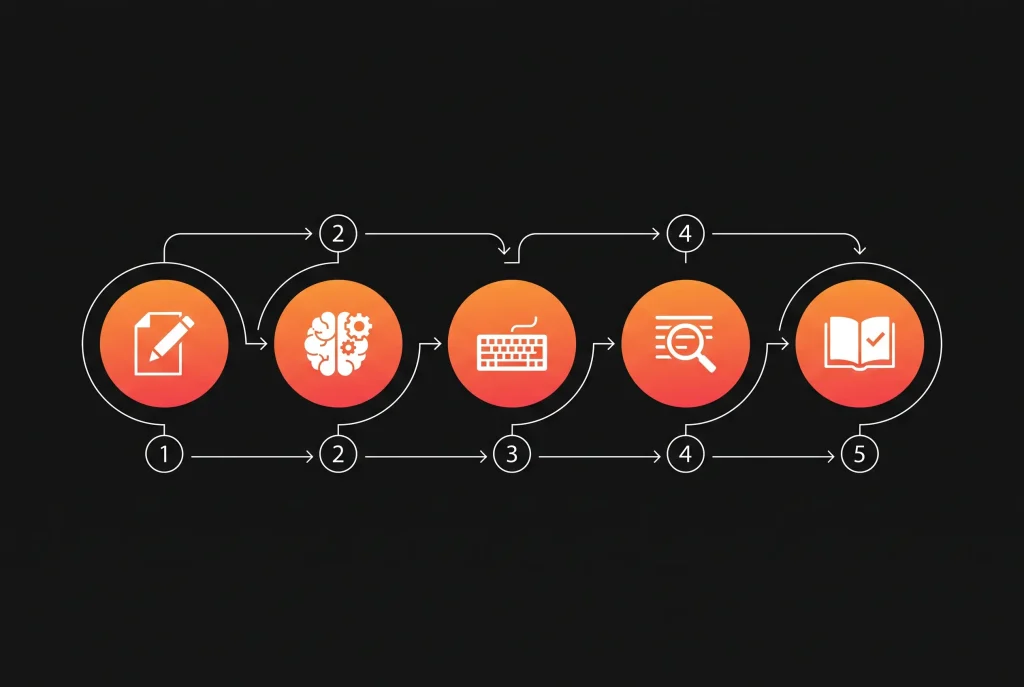
- Signal that you’re concluding, without relying on a tired opening phrase.
- Restate your thesis in new language, reflecting what you now know after completing the research.
- Summarize your key findings, focusing on results, not methods.
- Explain the significance of what you found, connecting it to the broader field or real-world context.
- Acknowledge limitations, if relevant, briefly and without undermining your own work.
- End with a closing statement that leaves the reader with something to think about.
Step 1: Restate Your Thesis Without Repeating It Word for Word
Your reader already read your thesis once, in the introduction. Repeating it verbatim in the conclusion signals that you haven’t actually developed your thinking since then. Instead, restate it using what you now know after presenting your evidence.
Weak: “In conclusion, social media affects teenagers’ mental health.”
Stronger: “The evidence gathered here shows that the relationship between social media use and teenage mental health is not a simple cause-and-effect link, but one shaped heavily by usage patterns, peer comparison, and parental involvement.”
The second version reflects the fact that the paper actually said something specific. It shows growth in the argument rather than looping back to where it started.
Step 2: Summarize Your Main Findings
This is where many students either say too little or too much. The goal is not to walk back through every paragraph of your paper. It’s to pull out the two or three findings that matter most to your argument and state them clearly.
A useful test: if you deleted everything except your introduction and conclusion, would a reader understand what your paper actually found? If the answer is no, your summary is too thin. If your conclusion reads like a compressed table of contents, it’s too detailed.
Step 3: Explain the Significance of Your Findings
This is often the step students skip entirely, and it’s usually the one that separates an average conclusion from a strong one. After summarizing what you found, explain why it matters. Does it support existing theory? Challenge it? Fill a gap in the literature? Suggest a practical application?
For example, a paper on renewable energy adoption in small businesses might summarize its findings and then explain that those findings suggest local policy incentives may be more effective than national subsidies at driving adoption among small business owners specifically. That single sentence turns a summary into an argument.
This is also where your findings can circle back to the existing research you engaged with earlier in the paper. If you followed solid guidance on how to write a literature review when framing your background research, your conclusion is a natural place to note briefly whether your results support, complicate, or diverge from that existing body of work.
Step 4: Acknowledge Limitations (When Relevant)
Not every paper needs this, and it should never dominate the conclusion, but many research papers benefit from a brief, honest note about scope. A sample size that was small, a geographic area that was limited, or a variable you weren’t able to control for are all fair to mention in one or two sentences. This isn’t a weakness. It shows the reader you understand your own research clearly enough to know its boundaries.
Step 5: End With a Strong Closing Statement
Your final sentence should feel like a natural stopping point, not an abrupt one. Some options include:
- A brief note on what future research could explore
- A statement connecting your findings to a broader real-world issue
- A concise reflection on why the topic matters beyond the scope of the paper
Avoid ending on a rhetorical question or an overly dramatic statement. A strong closing line is usually quieter and more confident than students expect it to be.
How Long Should a Research Paper Conclusion Be?
For most undergraduate and graduate research papers, a conclusion runs about 5 to 10 percent of the total paper length. A 2,000-word paper might have a conclusion of 100 to 200 words. A 10-page research paper might run closer to half a page to a full page.
There’s no strict word count rule, and requirements vary by course and instructor, so it’s worth checking your assignment guidelines first. What matters more than hitting a specific number is proportion: your conclusion should feel complete without dragging on longer than the point it’s making requires. A conclusion that’s noticeably longer than your introduction is often a sign that new material has crept in where it doesn’t belong.
This same discipline around proportion shows up elsewhere in a paper too. A good abstract guide for a research paper will make a similar point: both the abstract and the conclusion are meant to compress your paper into its most essential ideas, just written for different points in the reading process, so neither one should run on longer than it needs to.
What to Include and What to Avoid in a Research Paper Conclusion
What to Include
- A reworded version of your thesis
- A focused summary of your most important findings
- A clear statement of why those findings matter
- Optional, brief mention of limitations or future research directions
- A confident closing sentence
What to Avoid
- New arguments or evidence. The conclusion is not the place to introduce information you haven’t already discussed. If a point is important enough to include, it belongs in the body of the paper, where you have room to support it.
- A word-for-word repeat of your thesis or introduction. This makes the conclusion feel like filler rather than a genuine close to your argument.
- An exhaustive summary of every point. Trying to touch on everything from every section usually makes the conclusion read like a list rather than a conclusion.
- New citations or sources. Since you’re not introducing new claims, you generally shouldn’t need new citations either. Any sources you reference should already appear earlier in the paper.
- Excessive hedging or apology. Phrases like “this paper only scratched the surface” or “much more research is needed to say anything for certain” can undercut work you’ve already done well.
A common student question here is whether you’re allowed to introduce new information in the conclusion at all. The short answer is no. If new evidence, statistics, or arguments show up for the first time in your conclusion, a reader has no way to evaluate them, since they haven’t seen your supporting analysis. Anything new belongs in the body or, if it’s genuinely a direction for future work, framed explicitly as a suggestion rather than a finding.
Research Paper Conclusion Examples
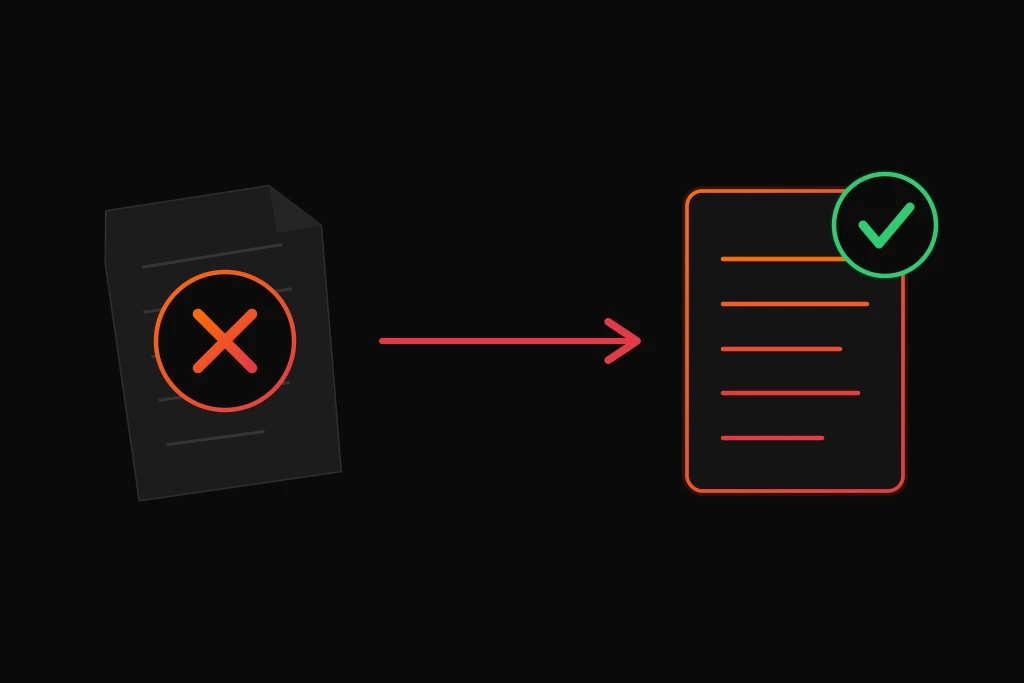
Seeing a weak conclusion next to an improved version often makes these principles clearer than a list of rules does.
Example topic: Effects of remote work on employee productivity
Weak conclusion: “In conclusion, this paper discussed remote work and productivity. Remote work has both pros and cons. Some employees like it and some don’t. More research should be done on this topic in the future. Overall, remote work affects productivity in different ways.”
This version restates the topic in vague terms, offers no specific findings, and ends without saying anything the reader couldn’t have guessed before reading the paper.
Improved conclusion: “This study set out to examine how remote work arrangements affect self-reported productivity among knowledge workers, and the results point to a more nuanced picture than the ‘remote work helps or hurts’ framing common in public discussion. Productivity gains appeared most consistently among employees with dedicated home workspaces and clearly defined work hours, while employees without either factor reported lower output than they did in office settings. These findings suggest that productivity outcomes may depend less on remote work itself and more on the structural conditions surrounding it. Organizations considering permanent remote policies may benefit from focusing less on location and more on supporting the specific conditions, such as workspace setup and schedule clarity, that this research links to stronger outcomes.”
The improved version restates the thesis in new language, names specific findings, and explains what those findings mean for a real audience, all without introducing anything the paper hasn’t already supported.
How to Start a Research Paper Conclusion
Many students get stuck on the very first sentence. The instinct is often to reach for “In conclusion” or “To sum up,” but overusing these phrases can make the section feel mechanical, especially if your introduction already used a similarly obvious opener.
Instead of announcing that you’re concluding, try opening with a sentence that does real work: a reworded thesis statement, a brief return to the significance of your topic, or a sentence that signals closure through tone and structure rather than a stock phrase. A conclusion doesn’t need a formal transition word to feel like a conclusion. Readers generally sense the shift from the position of the paragraph and the shift in the language itself, from specific evidence back toward broader meaning.
It can help to think of your conclusion’s opening as a mirror image of your introduction. A strong introduction for a research paper usually narrows from a broad hook down to a specific thesis, so your conclusion’s opening line can do the reverse, starting from that same thesis and beginning to widen back out.
If you’re aiming for a natural transition, a phrase like “Taken together, these findings suggest…” or “This research points to…” tends to work better than a flat announcement that the paper is ending.
Common Mistakes Students Make in Research Paper Conclusions

- Repeating the introduction almost exactly. This is one of the most common issues instructors flag. If your conclusion could be swapped in for your introduction with only minor edits, it needs more development.
- Summarizing every single paragraph. A conclusion that walks through the paper section by section, in order, often ends up sounding like an outline rather than a synthesis.
- Introducing new arguments. As covered above, this is a frequent and easily avoidable mistake.
- Confusing the discussion section with the conclusion. These serve different purposes, covered in more detail below.
- Ending too abruptly. Some conclusions stop right after the summary, without ever explaining why the findings matter, which leaves the paper feeling unfinished.
- Writing a conclusion that’s too short to feel substantial. A single generic sentence rarely does justice to a full research paper.
If you’re consistently running into these issues across multiple assignments, working with a research paper support service can help you get feedback on structure and argument development before you submit, rather than after grades come back.
How Do You Write a Conclusion When the Results Are Inconclusive or Unexpected?
Not every research paper produces clean, confirmed results, and that’s a normal and legitimate outcome to write about. If your findings were inconclusive, mixed, or different from what you expected, say so directly rather than trying to force a tidy narrative that isn’t supported by your data.
A useful approach is to state clearly what the data did and didn’t show, then explain what might account for the ambiguity, such as sample limitations, methodology constraints, or variables outside your control. From there, you can frame the result as a legitimate contribution: unexpected findings often point toward genuinely useful questions for future research, and acknowledging that is more academically honest than overstating certainty your evidence doesn’t support.
Research Paper Conclusion vs. Discussion Section: What’s the Difference?
These two sections are often confused because they both come near the end of a paper and both deal with interpreting results, but they serve different functions.
The discussion section is where you analyze your results in depth: comparing them to prior research, exploring possible explanations, addressing unexpected outcomes, and working through the implications in detail. It’s typically the longest analytical section after your results.
The conclusion, by contrast, is much shorter and more condensed. It doesn’t introduce new analysis. Instead, it takes the interpretation you already built in the discussion and distills it into a final, synthesized statement that closes the paper. If your discussion section is where you think through what your results mean, your conclusion is where you state, briefly and confidently, what you’ve concluded.
How the Conclusion Connects to the Rest of Your Research Paper
A conclusion doesn’t function in isolation. It only works well when it’s clearly tied to the structure that came before it, which is part of why it’s worth thinking about your conclusion early rather than treating it as an afterthought written the night before a deadline.
Your methodology section explains how you gathered your evidence, and your conclusion should reflect an accurate understanding of what that method could and couldn’t tell you. Your results section presents your raw findings, while your conclusion selects and interprets only the most important ones. Your discussion section, as covered above, does the heavy analytical lifting that your conclusion later condenses into a short, confident final statement.
None of these sections work as well in isolation as they do together. Reviewing the different parts of a research paper as a whole, and how each one sets up the next, makes it much easier to write a conclusion that feels like the natural final step in an argument rather than a section bolted on at the end.
FAQs About Research Paper Conclusion
What is a conclusion in a research paper?
A conclusion is the final section of a research paper where you restate your thesis, summarize your key findings, and explain their significance. It brings the paper’s argument to a close without introducing new evidence or analysis.
How long should a research paper conclusion be?
Most conclusions run about 5 to 10 percent of a paper’s total length. For a typical undergraduate paper, that’s usually one to three paragraphs, though exact expectations vary by instructor and assignment.
Can you cite sources in a research paper conclusion?
Generally, no new sources should appear in the conclusion. Since the conclusion shouldn’t introduce new evidence, any research it references should already have been cited earlier in the paper.
Should a research paper conclusion have a title, like “Conclusion”?
In most formatting styles, yes, a clear heading such as “Conclusion” helps readers and instructors quickly locate this section, though some disciplines fold conclusions into a combined “Discussion and Conclusion” heading instead.
Is it okay to use “in conclusion” to start a research paper conclusion?
It’s not incorrect, but it’s often unnecessary and can feel repetitive if used alongside similarly obvious transitions elsewhere in the paper. A conclusion is usually stronger when it opens with substance, like a reworded thesis, rather than a stock phrase announcing itself.
What’s the difference between a conclusion and a summary?
A summary simply restates what was covered. A conclusion does more: it restates key points but also interprets their significance and provides closure, rather than just listing what came before.
Do all research papers need a conclusion?
Almost all do, though the format can vary. Some scientific papers combine conclusions with the discussion section, while humanities papers often have a distinct, standalone conclusion. Check your specific assignment or journal guidelines if you’re unsure.
How do I know if my conclusion is too short?
If your conclusion doesn’t restate your thesis, summarize your main findings, and explain their significance, it’s likely too thin, even if it’s grammatically complete. A conclusion that’s just one or two generic sentences usually needs more development.
Can a research paper conclusion include recommendations?
Yes, particularly in applied or scientific research. Brief recommendations for practice, policy, or future study are appropriate as long as they follow directly from findings you’ve already presented, rather than introducing new claims.
How do I avoid sounding repetitive in my conclusion?
Focus on rewording your thesis rather than copying it, and resist the urge to summarize every paragraph in order. Instead, choose the two or three findings that matter most and explain what they add up to, which naturally produces different language than your introduction used.
Final Thoughts
A strong research paper conclusion isn’t complicated once you understand what it’s actually meant to do. It restates your thesis in a way that reflects what your research showed, summarizes the findings that matter most, explains why those findings are significant, and closes with a statement that gives the reader a genuine sense of completion. What it should never do is introduce new arguments, repeat earlier sections word for word, or trail off without explaining why any of it mattered.
The best conclusions read like a natural extension of the argument that came before them, not a separate, bolted-on section written at the last minute. With a clear sense of your thesis, your key findings, and their significance, writing that final paragraph becomes far more straightforward than it looks from the blank page.